You’ve probably done it before. You search for the service you offer. Your competitor shows up first. Maybe they’re a newer company. Maybe their website doesn’t even look as polished as yours. Maybe you know your team provides a better product or service.
So why are they outranking you?
It’s one of the most common questions we hear from business owners, and the answer is almost never just one thing. Google doesn’t rank businesses based on who has been around the longest or who has the nicest website. It ranks websites based on hundreds of signals that help determine which business is most likely to give the searcher the best answer.
The good news? Most of those signals can be improved.
Let’s look at what your competitors may be doing differently and what it means for your business.
Google Doesn’t Rank Businesses. It Ranks Answers.
One of the biggest misconceptions about SEO is that Google ranks businesses. It doesn’t.
Google ranks webpages. Every search is essentially a question.
Someone searching for:
- emergency plumber near me
- best accountant for small business
- digital marketing agency in NJ
is asking Google to recommend the best answer. Your job isn’t simply to have a website. Your job is to become the best answer.
That’s a very different mindset, and it’s one that shapes every SEO strategy we build at Shoreline Digital Agency.
They Probably Have Better Content
Let’s start with the biggest factor. Content. That’s what you’re reading right now!
Many business websites were built several years ago and haven’t changed much since.
Maybe they have:
- Five service pages
- An About page
- A Contact page
That’s it. Now compare that to a competitor who has invested in:
- Educational blogs
- Detailed service pages
- FAQs
- Industry resources
- Location pages
- Comparison articles
- Buying guides
Which business appears more knowledgeable? Well, Google asks the same question.
Every helpful page your competitor publishes becomes another opportunity to appear in search results. It’s one reason content remains at the center of our SEO Services.
They’re Solving More Problems
Think about the last time you visited a hardware store. You probably didn’t ask where the hammer aisle was. You asked someone how to fix something.
The employee who understood your problem was far more helpful than the one who simply pointed at a shelf. Google works similarly. It rewards websites that solve problems, not just describe services.
For example, a roofing company shouldn’t only have a page titled “Roof Replacement.”
They should also answer questions like:
- How long does a roof last?
- Can I repair instead of replace?
- What does roof replacement cost?
- What happens during installation?
Each answer builds authority. Each answer creates another opportunity to be discovered.
They’re Building Topical Authority
Years ago, SEO was often about individual keywords. Today, Google wants to understand expertise.
Imagine you’re looking for financial advice. Who would you trust more? Someone who wrote one article about investing? Or someone who has written hundreds of articles covering retirement, taxes, budgeting, estate planning, and investing?
Search engines think the same way.
Businesses that publish consistently around their area of expertise develop what marketers call topical authority. That authority becomes increasingly valuable over time.
Their Website Is Easier to Use
SEO isn’t only about words. It’s also about experience.
Ask yourself:
- Does your website load quickly?
- Is it easy to navigate?
- Does it work well on mobile devices?
- Can visitors quickly find what they need?
Imagine walking into a department store where nothing is labeled. The products are great. The employees are knowledgeable. But finding anything is frustrating!
Eventually, you leave. Google notices those experiences.
A well-designed website supported by strong Web Development Services helps both users and search engines navigate your content more effectively.
They Understand Local Search
If you’re a local business, Google isn’t only evaluating your website. It’s evaluating your entire online presence.
That includes:
- Google Business Profile
- Reviews
- Business information consistency
- Service areas
- Local citations
- Location-specific content
Local SEO has become one of the most overlooked competitive advantages for small businesses.
Many companies focus entirely on their website while ignoring the local signals Google uses every day.
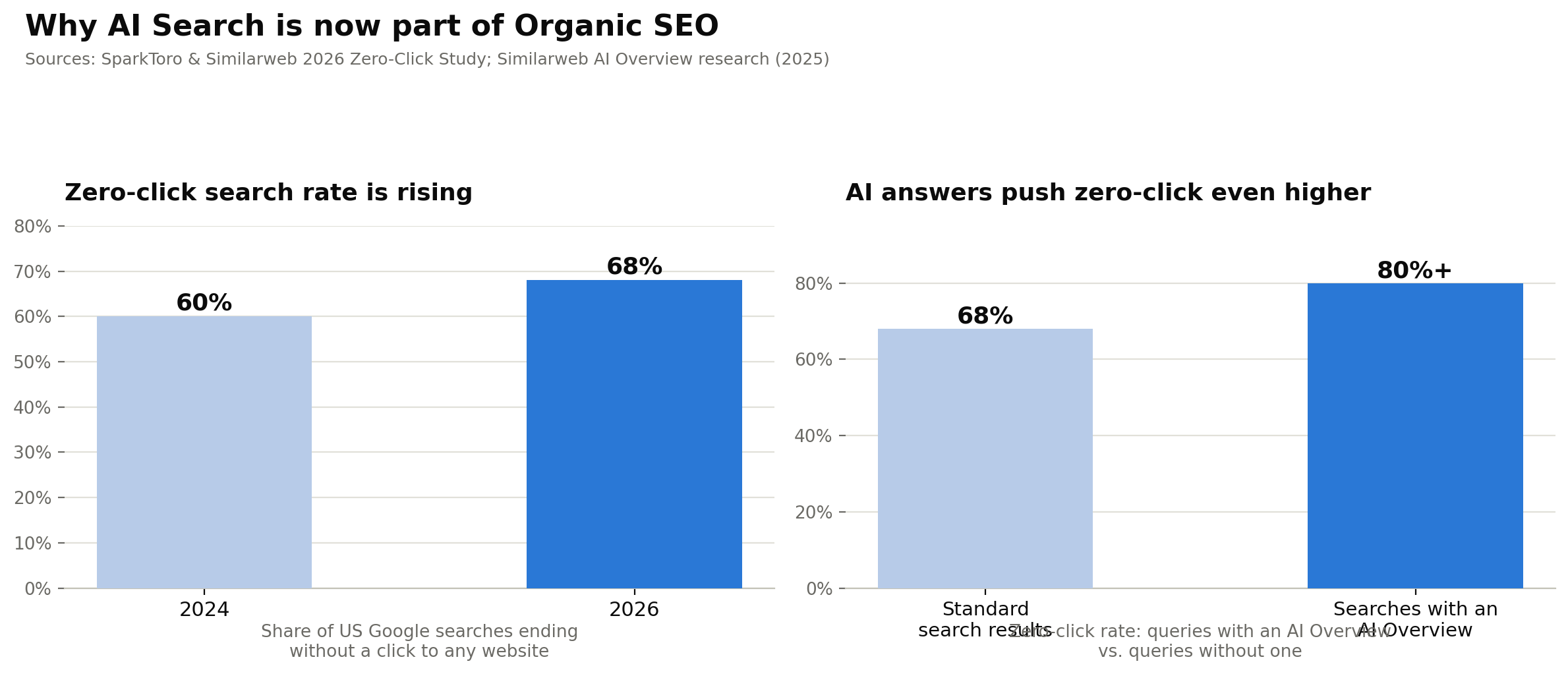
They’re Preparing for AI Search
Search is changing, especially with AI and LLMs.
Increasingly, users receive answers from:
- Google AI Overviews
- ChatGPT
- Gemini
- Claude
These systems don’t simply list websites but instead summarize information from trusted sources. That means businesses must think beyond rankings. The best websites need to become reference-worthy.
This is exactly why we developed our AI Search Optimization Services.
Our goal isn’t simply to help clients rank. It’s to help them become visible wherever customers search for answers.
They’re More Consistent Than You Think
Here’s something many business owners never see. Successful SEO isn’t usually built on one brilliant idea. It’s built on consistency.
Publishing one blog won’t transform your rankings. Neither will optimizing one page. But publishing useful content every month? That’s going to be a massive leap in what Google reads as website quality.
Improving your website regularly. Monitoring performance. Updating older pages. Expanding service content. Answering customer questions.
Those efforts compound.
Think about saving for retirement. Putting away $100 once won’t change much. Putting away $100 every month for years creates something much larger.
SEO works the same way.
They’re Paying Attention to Data
One of the biggest differences between average and exceptional SEO campaigns is measurement.
The best-performing businesses constantly ask questions like:
- Which pages generate leads?
- Which keywords are growing?
- Which competitors are gaining visibility?
- Where are people dropping off?
SEO isn’t a guessing game. It’s an ongoing process of learning, improving, and adapting.
As search evolves, businesses that make decisions based on data consistently outperform those relying on assumptions.
What Can You Do Today?
If your competitors are outranking you, don’t panic.
Instead, ask:
- Do we have enough quality content?
- Are we answering customer questions?
- Is our website easy to use?
- Are we investing consistently?
- Are we preparing for AI-powered search?
Most businesses don’t need to start over; they simply need a strategy.
Small improvements made consistently often produce remarkable results over time.
Rankings Are Earned, Not Given
Google doesn’t have a favorite business. It has a favorite answer.
The companies appearing at the top of search results have usually spent months or years building trust, publishing helpful content, improving user experience, and adapting as search evolves.
The encouraging part is that those same opportunities are available to your business. SEO isn’t about finding shortcuts but about becoming the business search engines are most confident recommending.
That’s exactly what we help our clients do every day.
Ready to Outrank Your Competition?
If you’re tired of watching competitors capture the clicks, leads, and customers that could be yours, it’s time for a smarter SEO strategy.
At Shoreline Digital Agency, we combine technical SEO, content strategy, local optimization, AI visibility, and data-driven decision making to help businesses build sustainable organic growth.
Learn more about our SEO Services, discover how AI Search Optimization is reshaping online visibility, or explore all of our Digital Marketing Services to see how we can help your business become the answer Google wants to recommend.
Frequently Asked Questions
Why do my competitors rank higher than me on Google?
Competitors often rank higher because they have stronger content, better technical SEO, greater topical authority, more backlinks, or a better overall user experience. Ranking improvements usually come from consistently optimizing all of these areas rather than focusing on just one.
Can a small business outrank larger competitors?
Yes. Small businesses often have advantages in local search, niche expertise, and specialized content. A focused SEO strategy can help smaller companies compete effectively against larger brands.
Does publishing more content improve SEO?
Publishing more content alone isn’t enough. Content should answer real customer questions, demonstrate expertise, and support your overall website structure. High-quality, relevant content consistently outperforms large amounts of thin or repetitive content.
How does AI search affect Google rankings?
AI-powered search experiences use many of the same quality signals as traditional search. Businesses with authoritative, well-structured, and trustworthy content are more likely to be referenced within AI-generated answers.
How long does it take to outrank competitors?
Every industry is different, but SEO is a long-term strategy. Businesses that consistently improve their content, technical performance, and authority typically see stronger results over time than those looking for quick fixes.